CHEESE ROLLING I Cooper’s Hill, Gloucestershire, England
The simple but dangerous sport of cheese rolling
Images and text by The Coracle
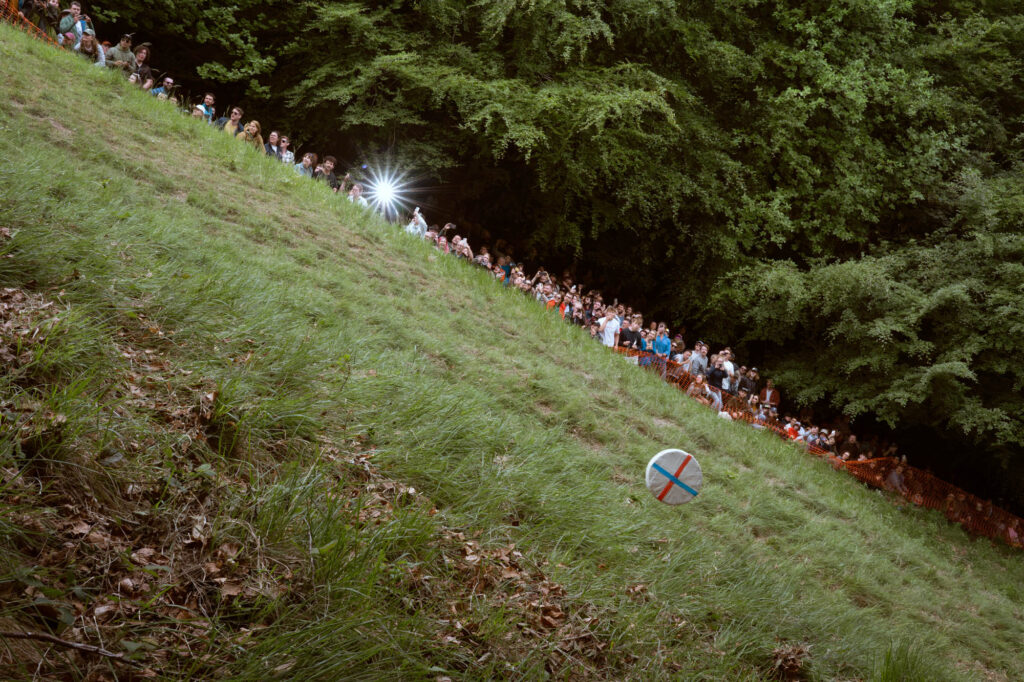
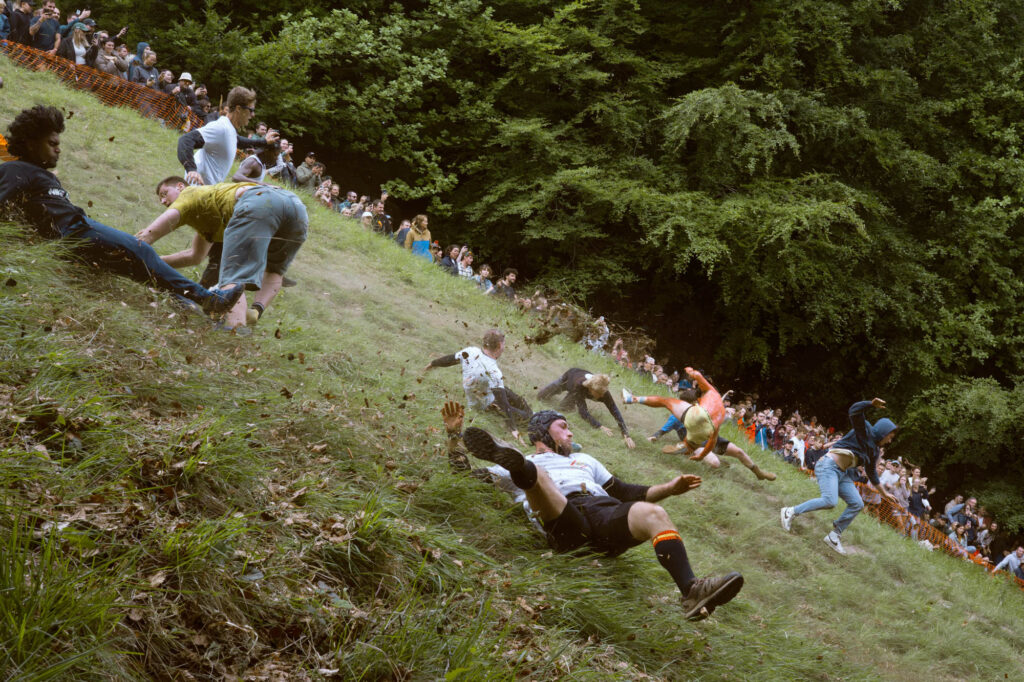
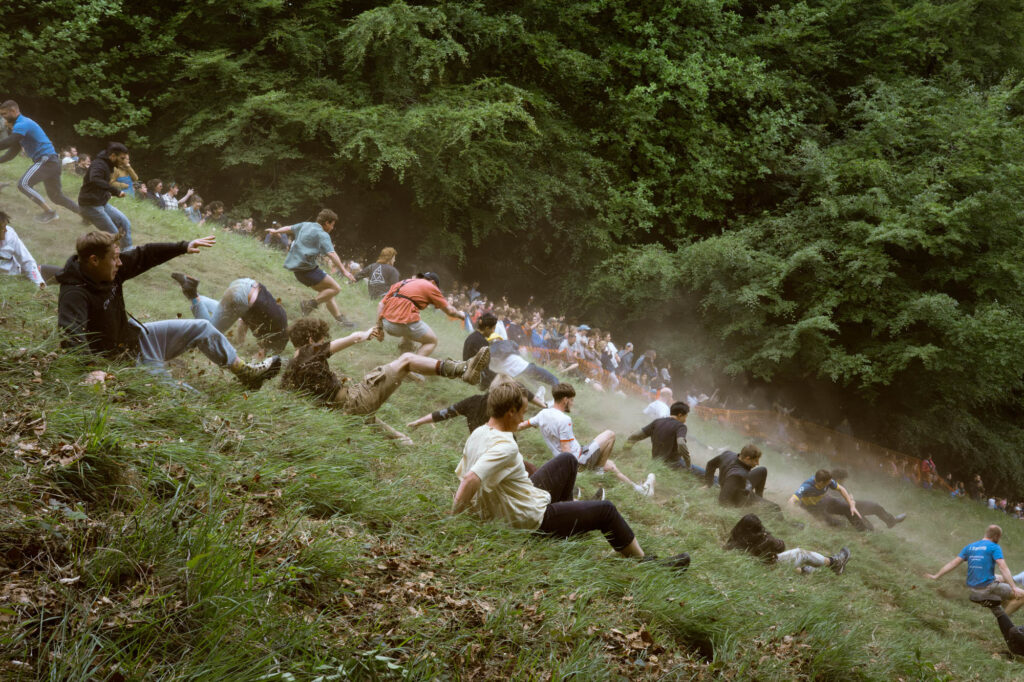
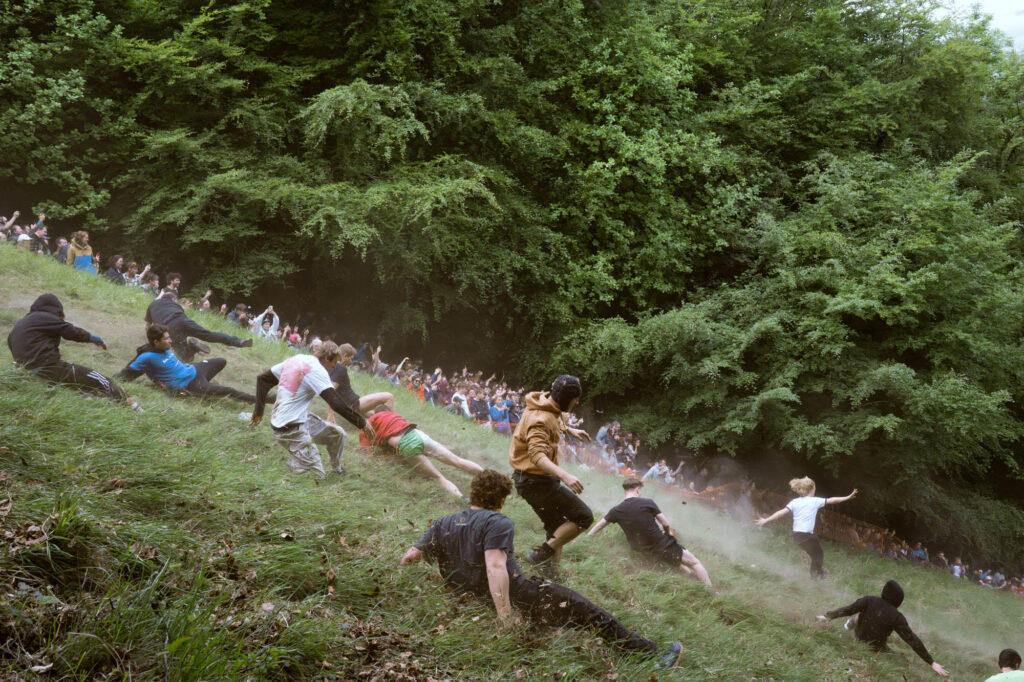
Once every year, a three kilogram wheel of cheese is rolled down the steepest slope in Gloucestershire at 80mph. Women and men hare down after it like loons. The wheel is never caught but the aim is to be first to the bottom. Seven races over 90 minutes, winner takes the cheese; which is of course Double Gloucester.
The first written record of the event was an 1826 letter to the nearby city of Gloucester’s town crier but people generally seem to think the roll has been around for 600 years. Its origins possibly derive from a beating the bounds ceremony or a celebration of the end of winter, pagan people being fans of rolling burning bundles of brushwood down a hill.
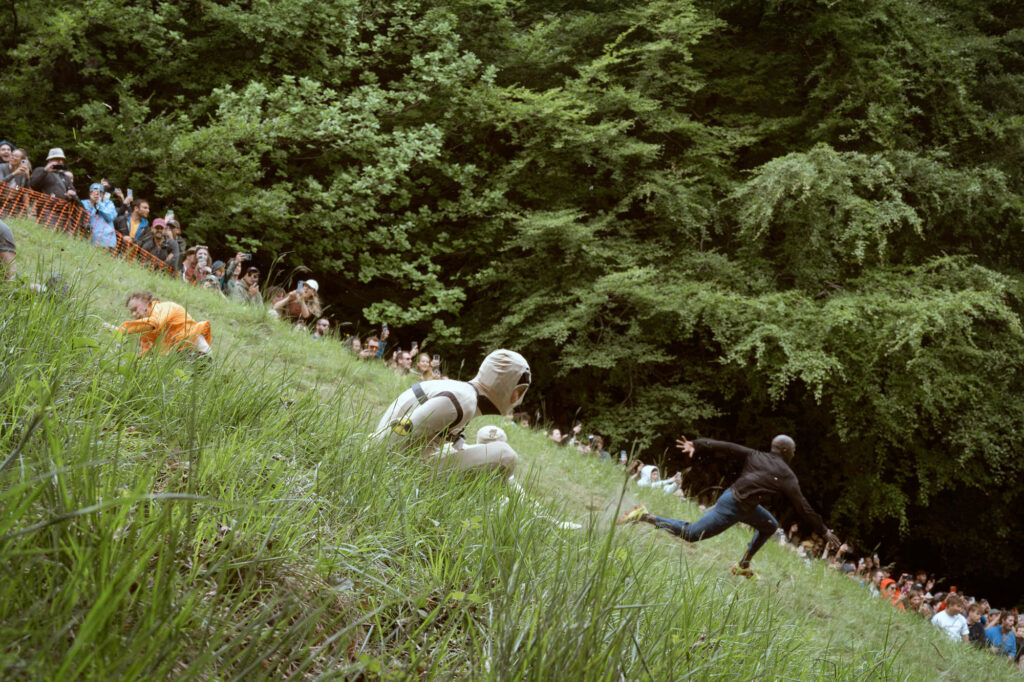
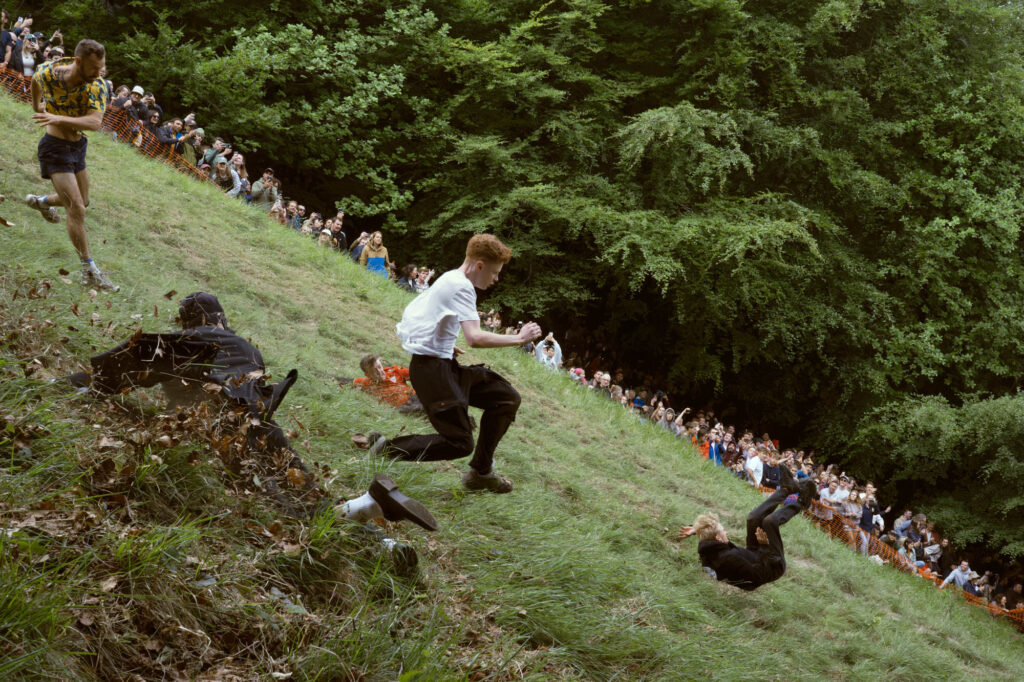
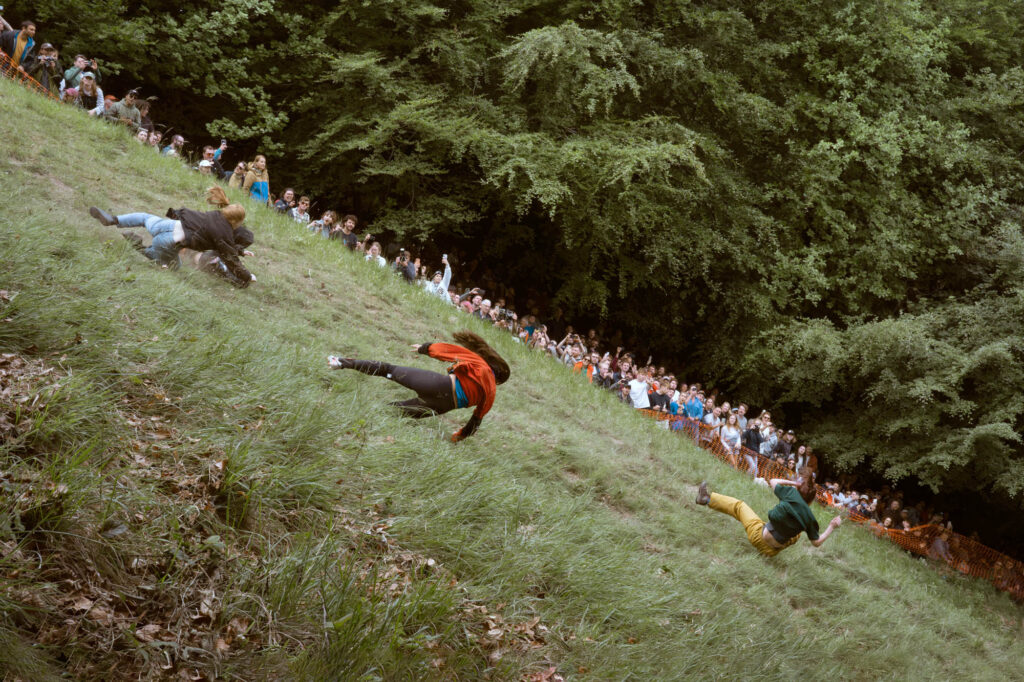
Racers use vastly different techniques, from rolling on their side to sliding on their bottoms. 22 time winner Chris Anderson, sitting it out this year due to the hard ground, recommends ‘running on your heels’. The big danger seems to be losing control and momentum taking over uncontrollably. This isn’t a ski slope, it’s rough ground with dips and troughs that can launch you into the air unexpectedly. Outfits vary from a wacky races style Captain Flash, crash test dummies and dinosaur costumes to y-fronts only, the more streamlined option apparently.
There are a lot of local accents but Canadian, French, and Japanese can also be heard. Some people discuss the Tomatina tomato festival in Spain and Siena’s Palio race in Italy as though they are on the folk version of the 18th century grand tour. In recent years there have been more winners from abroad. Tom Kopke, a German influencer picked up a cheese the last two years and Abby Lampe from North Carolina won 2024’s women’s race.
It means a lot to the local community though, you can hear it in the bants. Luke Briggs, dressed as Superman, won one of the men’s races and dedicated it to his father who took home the cheese four times. Multiple cheese winner Steve Brain had his ashes scattered at the top of the hill. The real heroes are the local Brockworth rugby team. Lined up as though at Twickenham, they rugby tackle people as they reach the bottom which stops anyone flattening themselves on a fence or the press pack. The event has worldwide coverage, is livestreamed on BBC iPlayer and was featured on Royal Mail stamps in 2019.
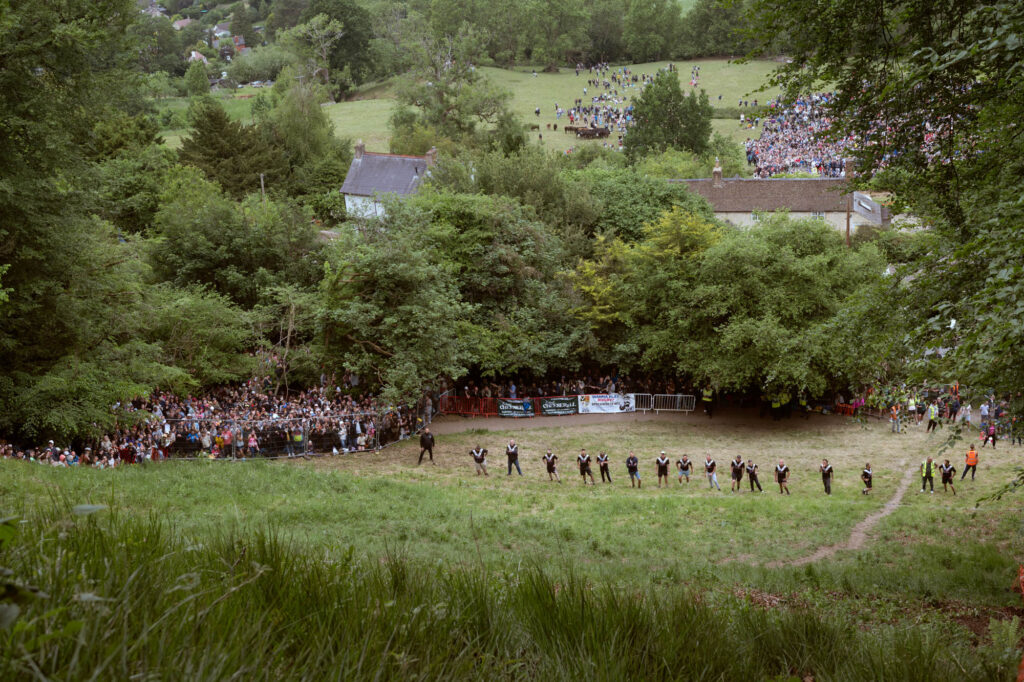
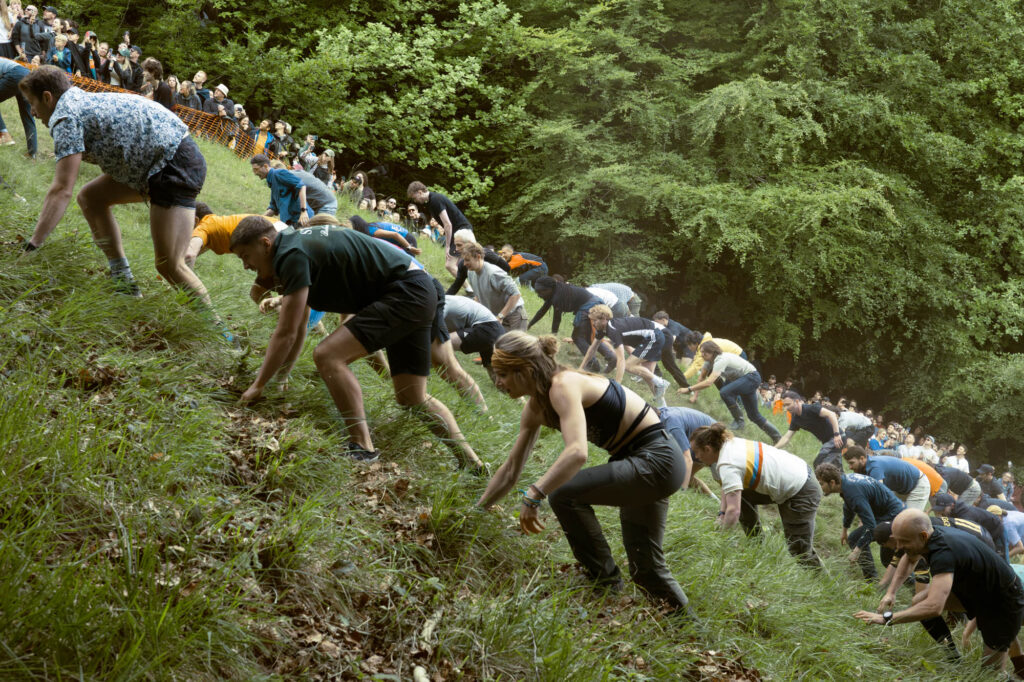
Most notable when seeing it live is the hill itself, much much steeper in real life, a broad swathe carved out of the surrounding woodland generations ago. The average gradient is 45 degrees, so steep that competitors start in a seated position at the top rather than standing. Even for spectators it’s not an easy watch; no grandstands and prawn sandwiches here but there is a fine view of Gloucester and the Severn Valley. People are 25 deep in the woodland either side, we slipped down the hill by a full metre during the event. Make sure you’ve been for a wee before getting in position.
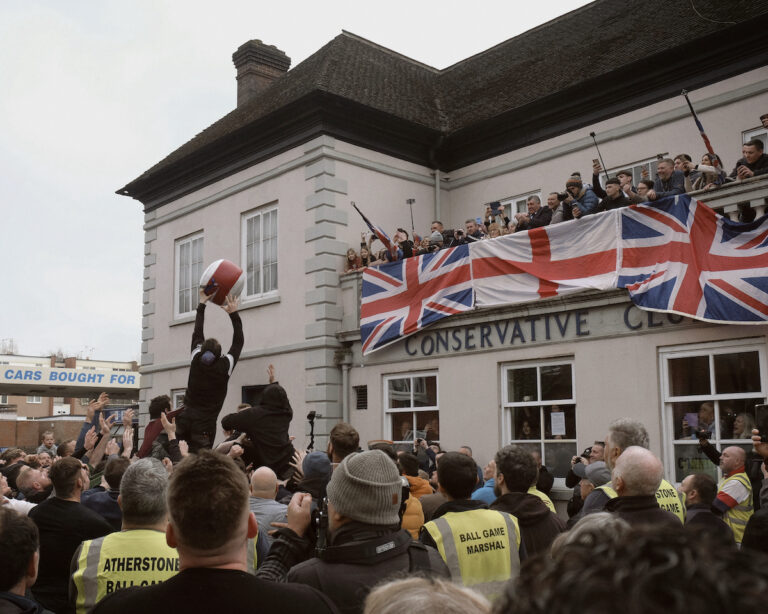
The build up is full of big British folk event anticipation, partly because many people aren’t really clear on what happens next. Like Atherstone’s ball game, the ‘organisers’ have a loose structure that keeps them from being sued for injuries but also preserves the refreshing lack of commerciality around the event. Shouts of ‘CHEESE CHEESE CHEESE’ ring around the crowd and with little ceremony the contestants are off like an episode of It’s a Knockout circa 1982. The crowd, maybe 20,000 strong, stretch into the field beyond, surrounded by bemused cows and the local farmer making a good day’s earnings from people parking on her fields of stubble.
Inevitably people are injured. After every race at least one person is quickly surrounded by sheets to protect them while they either recover their consciousness or check their bones for breaks. No one has died within living memory although four people were struck by lightning in 1982 and Canadian competitor Delaney Irving won the ladies’ race in 2023, despite finishing unconscious, and only learning of her victory in the medical enclosure. Two people were airlifted to Gloucester hospital this year and one contestant went airborne over a dip on the hill, flying through the air at a speed shocking enough to go viral. Even the cheese bites back, in 1990 a 58 year old grandmother was knocked out by one while spectating.
For children and less adventurous adults, there are races back up the hill with the rugby players using their softer skills to coax crying 10 year olds to finish what they’d started. Everyone seems to appreciate the absurdity of the competition but winning is still important. Local boy Alfie Townsend won the over 12’s uphill race this year with his mum Carla saying: ‘I’m chuffed. I’ve still got his cheese from two years ago wrapped up in the fridge’.
In these rightly health and safety-conscious times, events like these are remarkable in their survival. Is it in more jeopardy from the worrying number of winners that say they don’t like cheese?